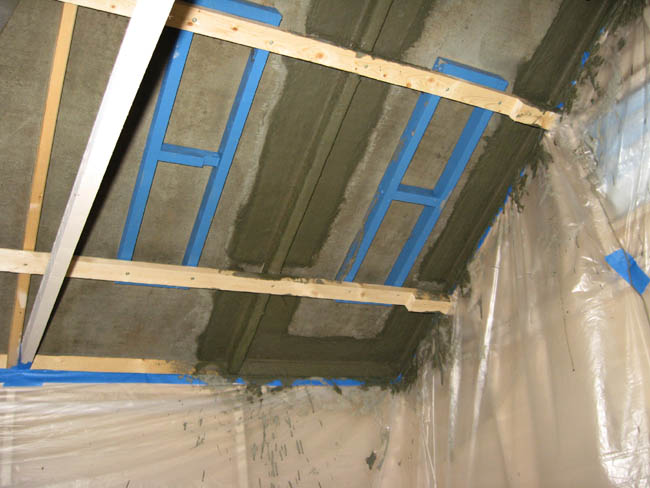
The next step is to encase the rafters in fabric that has been soaked in the cement and acrylic mixture. Be sure the fabric is tight against the wood rafter, rounded rafter edges would make this step slightly better.
A gap is left which corresponds to the unpainted wood strips which hold the blue temporary supports in place, it will be filled in later. The fresh burlap is darker. It was first submerged in water for a few minutes then allowed to drip until free water was gone. Note that the fabric composite has become a small "U" shaped girder. This shape is sometimes referred to as, "channel iron," when it is made of steel.
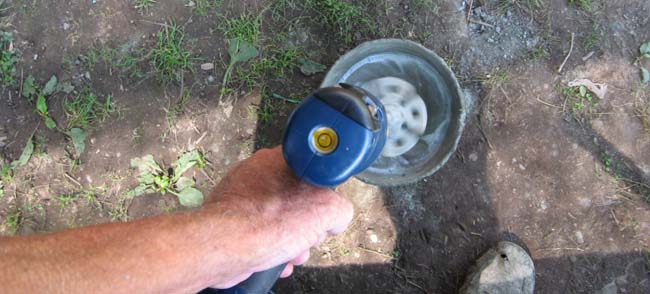
This battery powered drill motor and a mixing wand mixed all the material for the entire roof. Add cement to the acrylic until it is slightly thinner than you want, let the mixture stand for two or three minutes and it will thicken. Add more acrylic if necessary. The final mixture should be comfortable to brush; not as thick as pancake batter but thicker than paint.
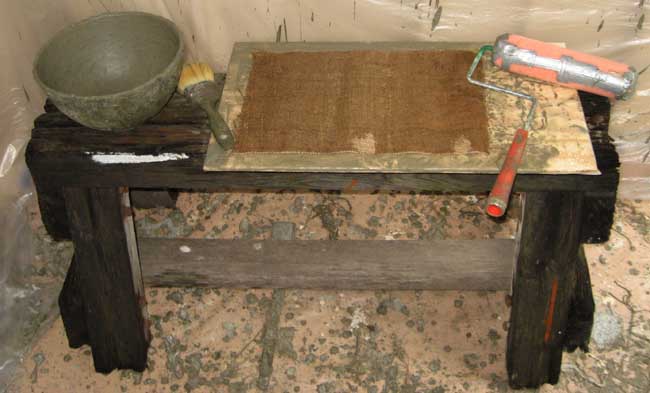
Flat pieces are next fit in above and below the temporary support. Lay a piece of the damp material on a piece of plastic covering flat wood, paint both sides with acrylic and cement mixture using a fairly large paint brush. Paint the area where the piece will be placed. The fresh material readily sticks in place. A paint roller with plastic taped over it is helpful to stick larger pieces overhead quickly.
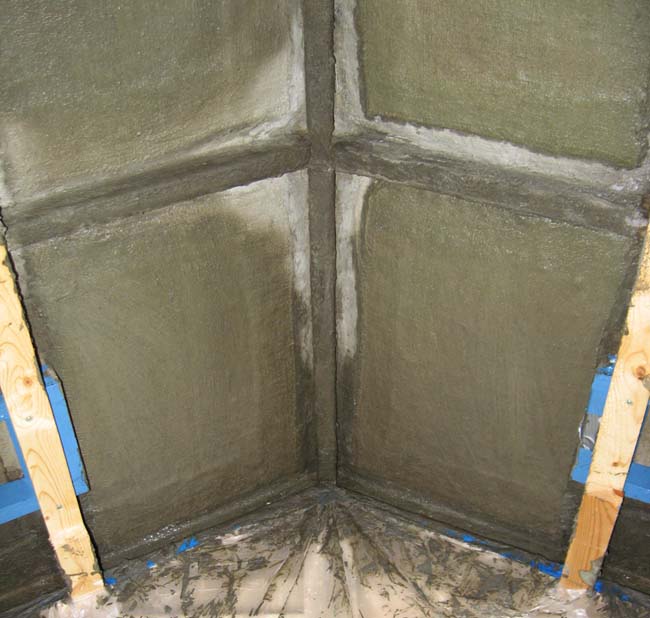
Remove the temporary supports when everywhere else has the added layer. Let the composite strengthen for a day before doing this.
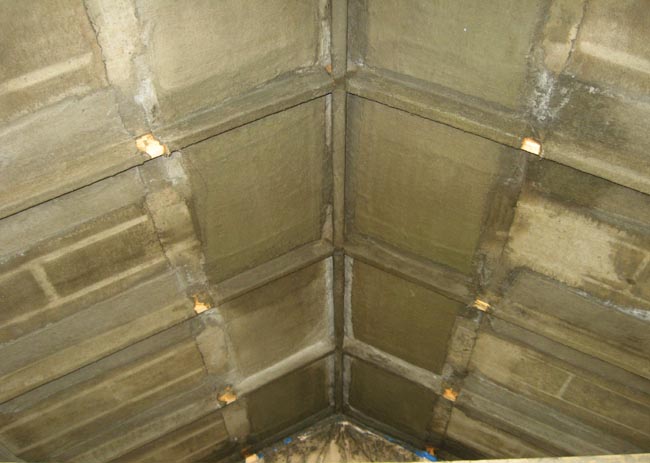
Cover the gaps left by the temporary support attachment to rafters.
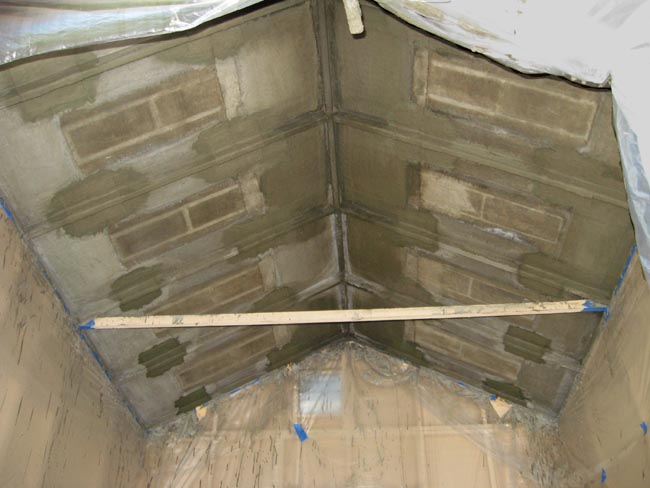
Then cover the area left between the rafters where the temporary supports had been.
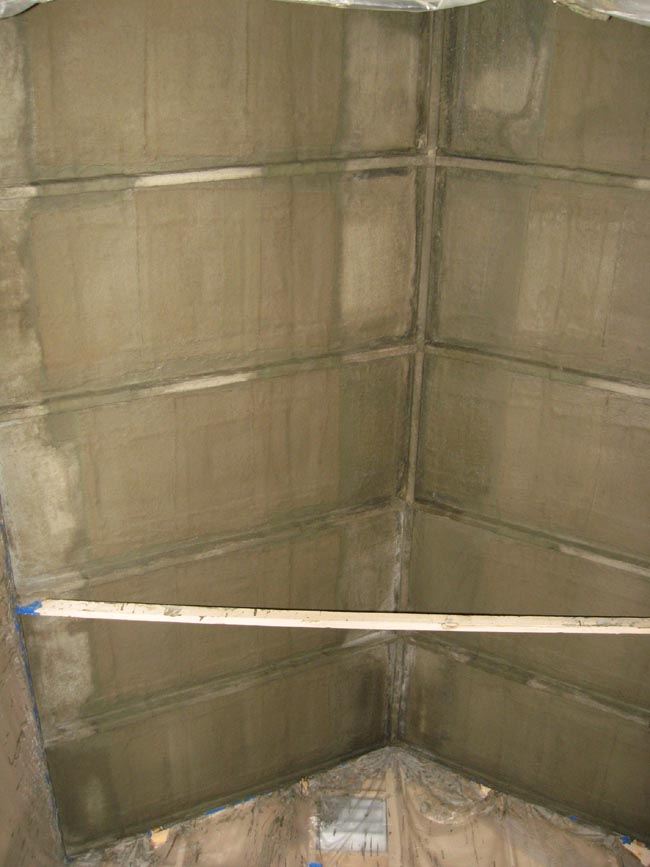
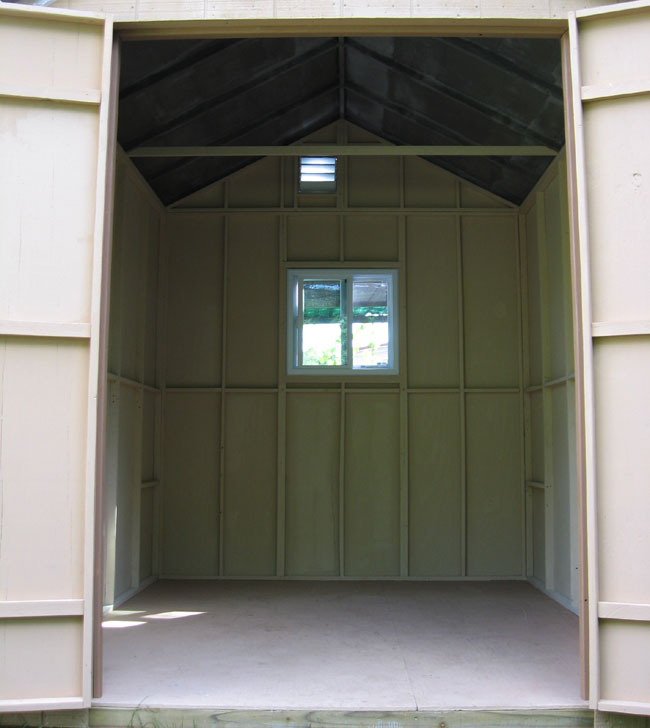
Looking in through the doors of the finished shed. The wood which simulates bamboo is at about the correct spacing for the size. The horizontal line below the window is at the height of the fabric and would have been used to connect the first and lower fabric layer. If fabric had been used for the walls as well as the roof, then the vertical studs would have been covered in the same manner as the roof rafters. In other words, the bamboo or vertical wood studs become molds for the reinforced composite. Notice that the side end panels have an added cross piece at the bottom. If the original intent to build the complete shed from fabric had been followed, all the end corner panels would have this added cross piece. Although the material is a concrete composite, a little extra reinforcement addresses structural fatigue which might eventually occur at the corners.
Mold designs following the next chapter will yield either curved or flat roofs with rafters but there is no wood in the rafter cavity except for where the roof attaches to the structure.
Note: There are brief and occasional variations of completness between the web publication and field manuals similar to the variations in different language versions of the field manuals.